High Prairie
Little House on the PrairieThe High Prairie is the vast, windswept grassland in Indian Territory where the Ingalls family builds their little house and lives through a year of isolation, danger, and wonder. It is the central landscape of the book, defined by its immensity, its wild animals, and its proximity to the Osage Indians, and it shapes every event from the building of the home to the final departure. The prairie is both the promise Pa sought and the threat the family must endure, a place where the sky and land seem too large and where the family's small house becomes a fragile haven against the surrounding wildness.
Identity and Setting
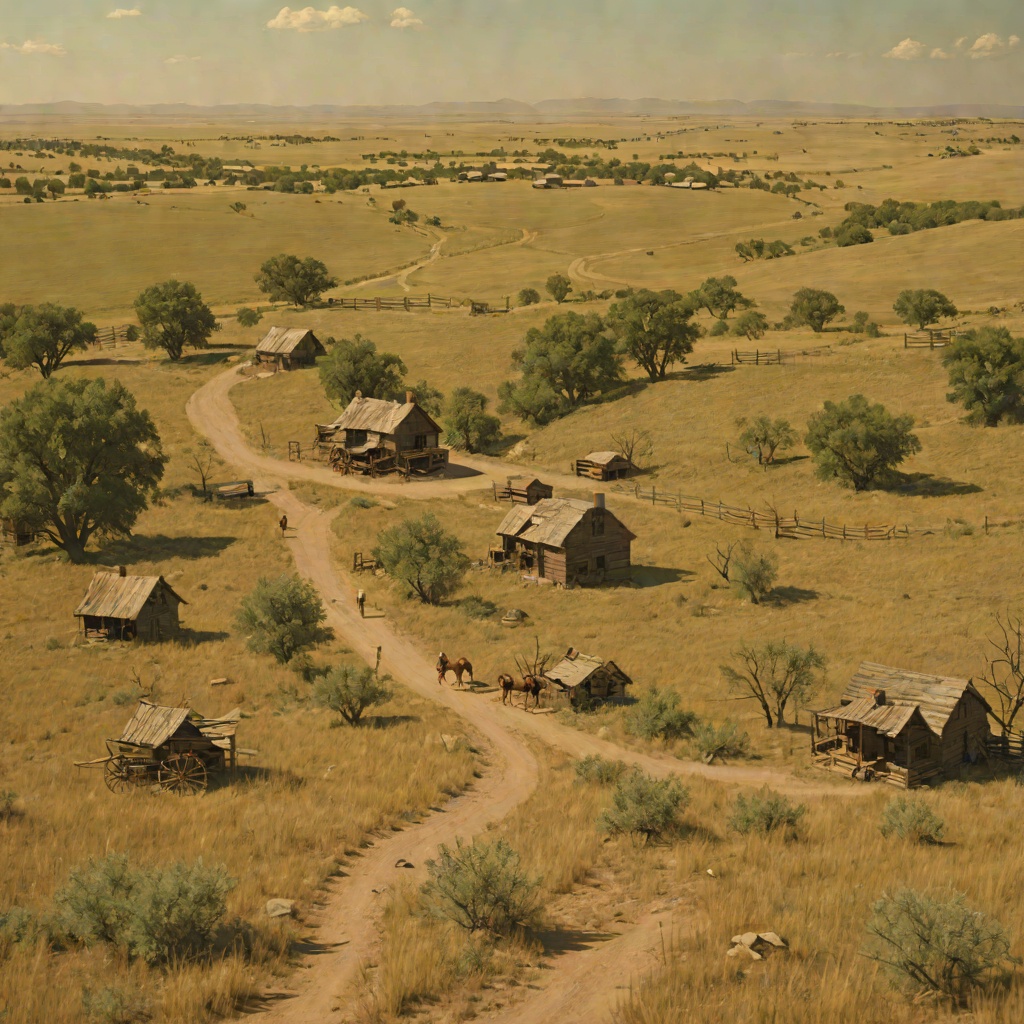
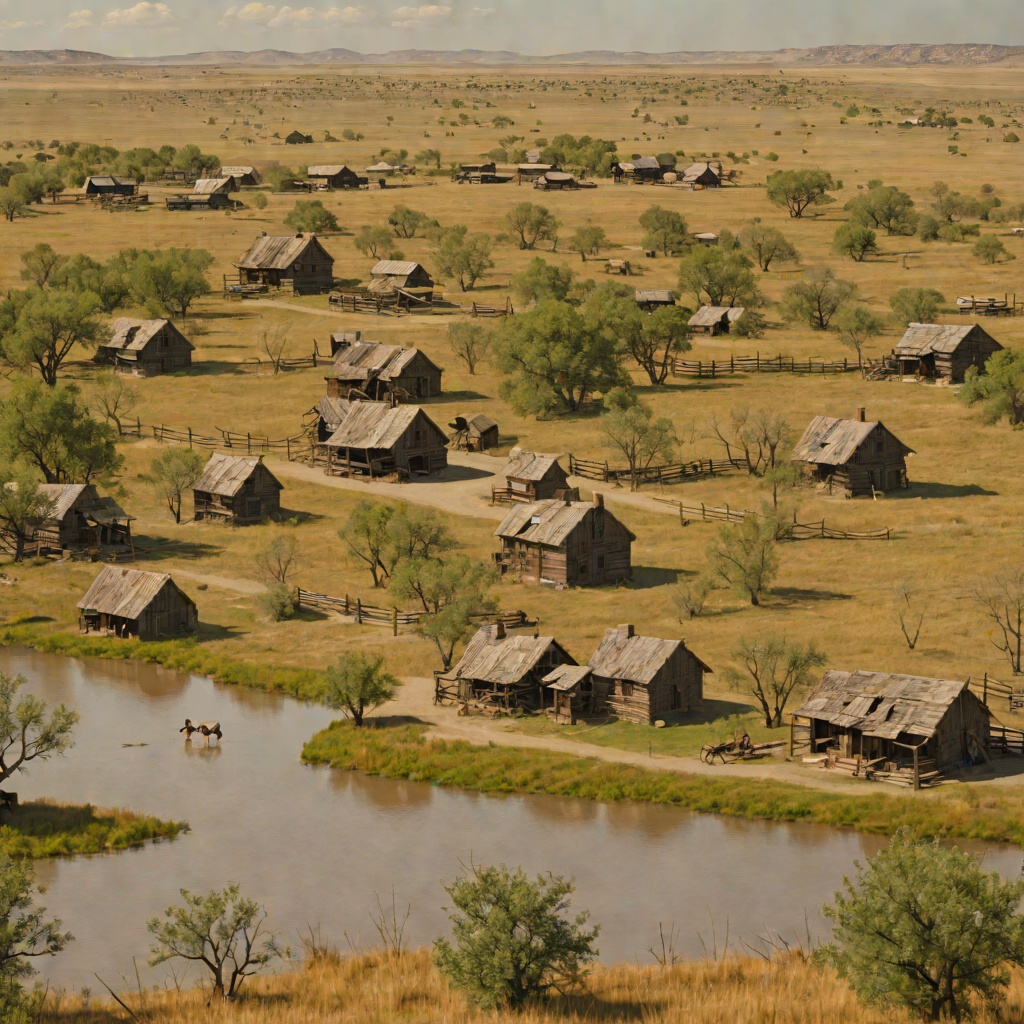
The High Prairie is the flat, endless land of tall grass that Pa described to Ma in the long winter evenings back in Wisconsin, a country where 'the land is flat and the grass grows thick and high' and where 'animals run freely and there are no settlers. Only Indians live there.' It is the destination of the family's westward journey, reached after crossing Wisconsin, Minnesota, Iowa, and Missouri, and then Kansas, an 'endless flat land covered with tall grass' where day after day they saw nothing but grass and a big sky. The prairie is defined by its scale: when Pa leaves to get logs from the creek, the land and sky seem too large, and Laura feels small, wanting to hide in the tall grass like a prairie chicken. It is a place of extremes, where the wind blows constantly and the grass sings, and where the nights are cold and the days short and grey. The family's house is built close to an old Indian trail that passes near it, a decision Pa later regrets, saying, 'I'm sorry I built the house so close to the Indian trail. But I thought they didn't use it anymore.'
The House and Domestic Life
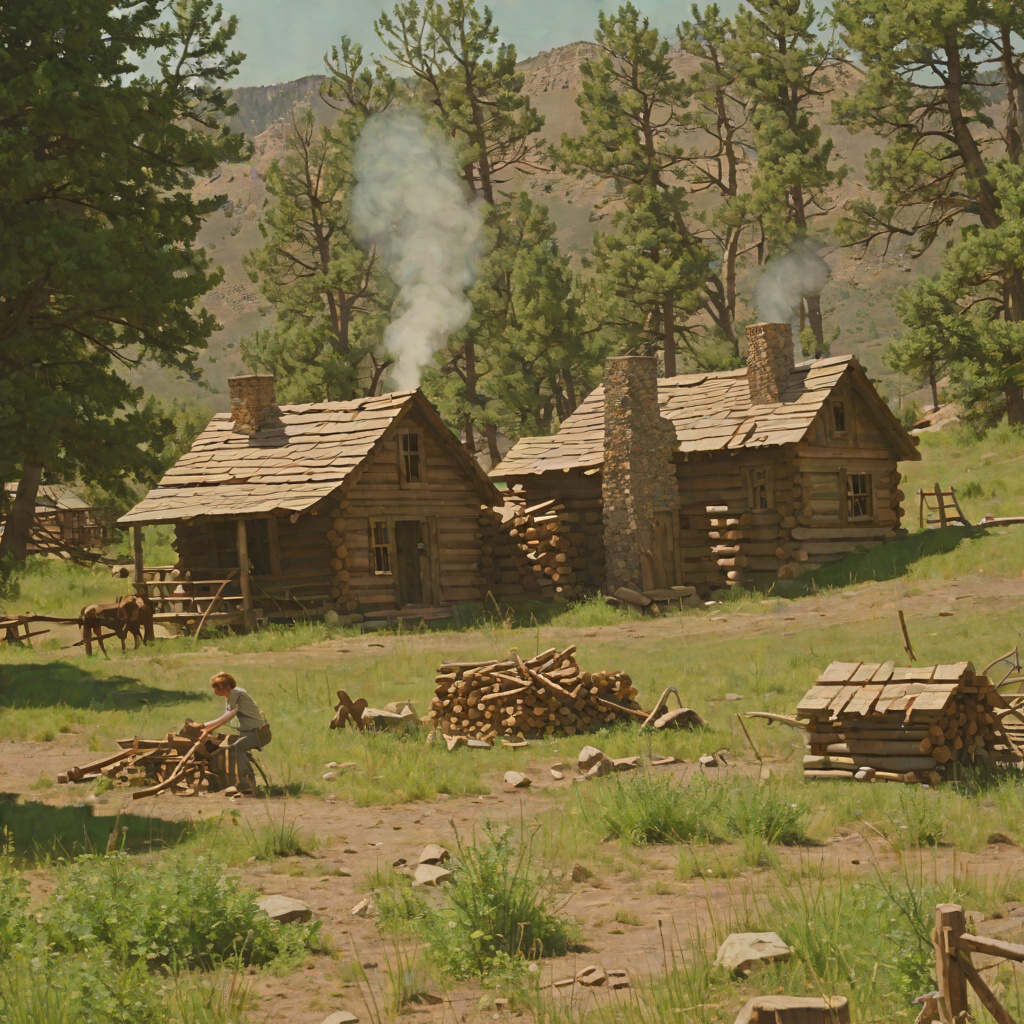
The High Prairie becomes the site of the family's domestic life, centered on the little house they build. After Pa finishes the walls and puts the canvas wagon cover over the top, the house is ready by dinner time, with beds made on the floor, short logs turned into chairs, and Pa's gun in its place over the door. Pa promises that before winter he will make a wood floor and a solid roof, but that must wait until he finishes helping Mr Edwards and building a stable. He tells Ma, 'We're going to do well here, Caroline. We'll be happy here for the rest of our lives.' Inside the thick walls, the family feels warm and safe, and Laura likes the great big sky, the winds, and the wide land, finding everything 'so clean and big and wonderful.' The domestic routine is established on the prairie: Ma builds a little fire in the new fireplace and cooks a prairie chicken for supper, and the family eats together in their house, with Laura sitting up straight on her log chair and using her knife and fork nicely as Ma taught her. The girls are busy all day, looking for birds, watching baby prairie chickens, and taking care of Baby Carrie, while Ma reminds them to keep their hats on so they don't get 'as brown as Indians in the sun.'
Wildness and Danger
The High Prairie is also a place of wildness and danger, where the family's safety is constantly tested. The wolves are the first great threat: one night Laura wakes to find Pa standing with his gun, and a wolf howls right in her ear, just on the other side of the wall. Many wolves howl all around the house, and Pa shows Laura the circle of wolves through the windows, their coats shining in the moonlight. The big wolf lifts his nose to the sky and howls, and all the other wolves answer him, the noise filling the wide prairie. Pa tells Laura to go back to sleep, saying, 'Jack and I will take care of you all,' but she hears the wolves howling and trying to smell them through the cracks in the walls for a long time before she falls asleep. The prairie's wildness also brings the Indians, who come riding on the path that passes so close to the house, sitting up straight on their naked horses and not looking right or left, though their black eyes shine. The constant presence of Indians makes Ma say, 'I can't look up without seeing one.'
The Indian Presence and the War-Cry Crisis
The High Prairie is the stage for the family's fraught relationship with the Osage Indians, culminating in the war-cry crisis. When the Indians begin dancing around their fires and talking about war, Pa explains to Ma that 'they need to know,' and tells Mary and Laura not to be afraid because he and Jack are there and there are soldiers at Fort Dodge. But Laura is terribly afraid, and the drums seem to beat inside her head, the wild howls worse than wolves. The next day the family cannot go out of the house, and there is not one sound from the Indian camps; the whole wide prairie is still. But that night the noise is worse, with terrible war-cries, Pa watching at the window with his gun, Laura and Mary staying close to Ma, and poor little Carrie crying. Jack growls all night long and howls when the war-cries come. Night after night, the Indians shout and dance and beat their drums, and all up and down the creek, war-cries answer war-cries, the sound filling the prairie. The silent days are worse than the nights, with the animals staying in the stable and the family confined to the house, while Pa watches and listens all the time, so tired that one day his head falls onto the table and he sleeps a little before waking with a jump and saying crossly to Ma, 'Don't let me do that again!'
The Departure of the Indians and the Family's Leaving
The High Prairie's character changes with the departure of the Indians. When the Osage chief called Great Soldier rides by with his people, the horse and the Indian chief go by without looking at Pa or Ma or Mary or Laura or the house, followed by other horses and Indians with eagle feathers in their hair. The women and children come riding behind the men, with little naked brown Indians no bigger than Mary and Laura riding by, their straight black hair blowing in the wind and their black eyes shining with happiness. Laura looks and looks at the Indian children, and they look at her, and she has a sudden wish to be a little Indian girl, to ride naked in the wind and the sun. When Indian mothers ride by with babies in baskets at the sides of their horses, Laura looks straight into the bright eyes of one little baby, its eyes black as a night when no stars shine, and she wants it. When Pa says the Indian woman wants to keep her baby, Laura begins to cry, and Ma asks, 'Why do you want an Indian baby, of all things?' Laura can only say, 'Its eyes are so black.' After the long line of Indians passes, nothing is left but silence and emptiness, and all the world seems very quiet and lonely. The family stays by the door and looks until nothing remains, and no one is hungry for dinner. The prairie, once full of the Indian presence, becomes empty, and the family's own departure from the High Prairie follows, leaving the little house behind as they had left their house in Wisconsin.